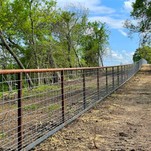
If you enjoy gardening or landscaping, chances are you've seen gabion walls, gabions baskets, or gabions fences. Alternatively, you may have come across them while researching your options. However, you may be unfamiliar with what they actually mean.
Gabion walls have been around for a long time and have been used to build strong, sealed structures, most notably along the Nile. However, they are now used for aesthetic and structural reasons in thousands of gardens.
We'll look at how to use gabions, gabions walls, and gabions fences in the garden in this section.
Gabion structures, such as walls and fences, do not need a concrete foundation. They do, however, necessitate some work beneath the surface. Otherwise, they are heavy and prone to tipping over.
Many factors influence how the foundation is built, including the material used for the wall, whether it is used for retention or fencing, the condition of the subsoil on the site, and so on. If there is any and some subsoil, the soft peat topsoil must be removed and replaced with a harder base.
When building a gabion wall on bedrock, you only need about 25 mm of substrate. Gabion, unlike many other types of walls, does not require a concrete foundation. A double-wide foundation gabion can be used under the main structure for heavier materials to improve wall stability.
In some cases, this is used when the subsoil is soft, allowing the weight of the wall to be distributed more evenly.
Smaller, lighter gabion walls do not necessitate extensive soil testing, but if you are constructing a larger, heavier wall or fence, you should have an expert check the foundation tests to determine the bearing strength of the subsoil.