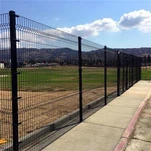
Fences are ubiquitous in our lives, and some processing of the fence also improves the quality of the fence. The galvanizing process is widely used in the fence netting industry. This process is divided into hot-dip galvanizing and cold-dip galvanizing in two ways. What is the difference between these two galvanizing processes?
What is hot-dip galvanizing?
Hot-dip galvanizing is also called hot-dip galvanizing. It melts the zinc ingot at high temperature, puts some auxiliary materials, and then immerses the metal structure in the galvanizing tank, so that the metal structure is attached with a layer of galvanized layer, and the metal structure is attached with a layer of galvanized layer. The advantages of hot-dip galvanizing are its strong corrosion resistance, high adhesion and hardness of the galvanized layer. The disadvantage is that the price is relatively high, and a lot of equipment and venues need to be invested. If the steel structure is too large, it is not easy to put it in the galvanizing tank. In addition, the steel structure is relatively thin and easily deformed. Zinc-rich coatings often refer to anti-corrosion coatings containing zinc powder.
What is cold galvanizing?
Cold galvanizing is actually electro-galvanizing. The cold galvanizing process is used to protect the metal and prevent corrosion. For this purpose, paints with zinc fillers are applied to the surface of the protected object after using any application method. This layer contains zinc at a content of 90%. Suitable for repair (that is, in repair work, as long as the surface can be repaired, only the damaged part of the protected steel surface can be repainted). The cold galvanizing process is used for the corrosion protection of various fence mesh products and structures. This process method is very small, only 10-50g/㎡, and its corrosion resistance is very different from that of hot-dip galvanizing. So the price of electroplating is relatively cheap.