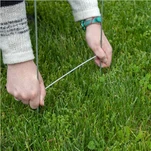
There are various types of ground anchors, each designed for specific applications and soil conditions.
Here are some common types:
1. Screw Anchors: Screw anchors, also known as helical anchors or screw piles, are twisted into the ground using torque. They have helical-shaped blades or shafts that provide resistance against uplift and lateral forces. Screw anchors are commonly used in construction, foundation systems, and soil stabilization projects.
2. Concrete Anchors: Concrete anchors are made of reinforced concrete and are typically installed by drilling a hole in the ground and then filling it with concrete. They offer strong support and stability and are widely used in structural applications, including building foundations and retaining walls.
3. Deadman Anchors: Deadman anchors consist of a buried mass or plate attached to a cable or rod. They rely on the weight of the buried material or plate to anchor the system against the applied load. Deadman anchors are commonly used in various applications, including soil erosion control, tent securing, and temporary structures.
4. Rock Anchors: Rock anchors are used for stabilizing rock or soil slopes. They are typically comprised of steel tendons or cables that are grouted into pre-drilled holes in the rock or soil. Rock anchors provide lateral support and are commonly used in geotechnical engineering, mining operations, and slope stabilization projects.
5. Ground Screws: Ground screws, also called ground augers or earth screws, are large metal screws with flanges or helical blades. They are screwed into the ground using machinery or manual force and provide stability and load resistance. Ground screws are commonly used in applications such as ground-mounted solar panels, fencing, and lightweight structures.

The depth at which a ground anchor should be installed depends on several factors, including the type of anchor, soil conditions, load requirements, and engineering specifications. It is important to consult with a qualified engineer or anchor manufacturer to determine the appropriate depth and installation method based on the specific project requirements.
For lightweight applications such as securing tents or temporary structures, ground anchors typically have a depth of around 12-24 inches (30-60 centimeters). This depth allows for sufficient stability in normal soil conditions.
In more substantial applications like anchoring fences, retaining walls, or heavy structures, the ground anchors may need to be installed at greater depths. In such cases, it is common to consult with a structural engineer or follow specific guidelines provided by anchor manufacturers to determine the appropriate depth. Depending on the soil conditions and load requirements, the depth can range from a few feet to several meters.
It is essential to note that local building codes and regulations may also provide specific requirements for ground anchor depths based on the location and intended use. Therefore, it is always advisable to consult with professionals or follow the guidelines provided by relevant authorities to ensure proper anchoring and structural integrity.